Yes — and by more than most homeowners think. Independent testing (NREL, UC San Diego, Google's own solar research) has repeatedly measured 5–15% output loss on typical soiled residential panels, and 20–30%+ on heavily soiled systems. In the Bay Area, most panels are well inside that range by the end of their first dry season.
Where the loss comes from
It's rarely one big thing. It's the combination:
- Fine dust from months without rain (May–October).
- Pollen — especially oak and grass — that binds to the glass.
- Bird droppings, which create total dead spots that also stress panel electronics.
- Coastal salt spray from Bay winds.
Why rain isn't enough
Rain rinses loose dust, but leaves mineral spots as it dries — the same spots you're trying to remove. Pollen and bird droppings barely move under rainfall. That's why panels don't 'reset' every winter.
What good cleaning actually does
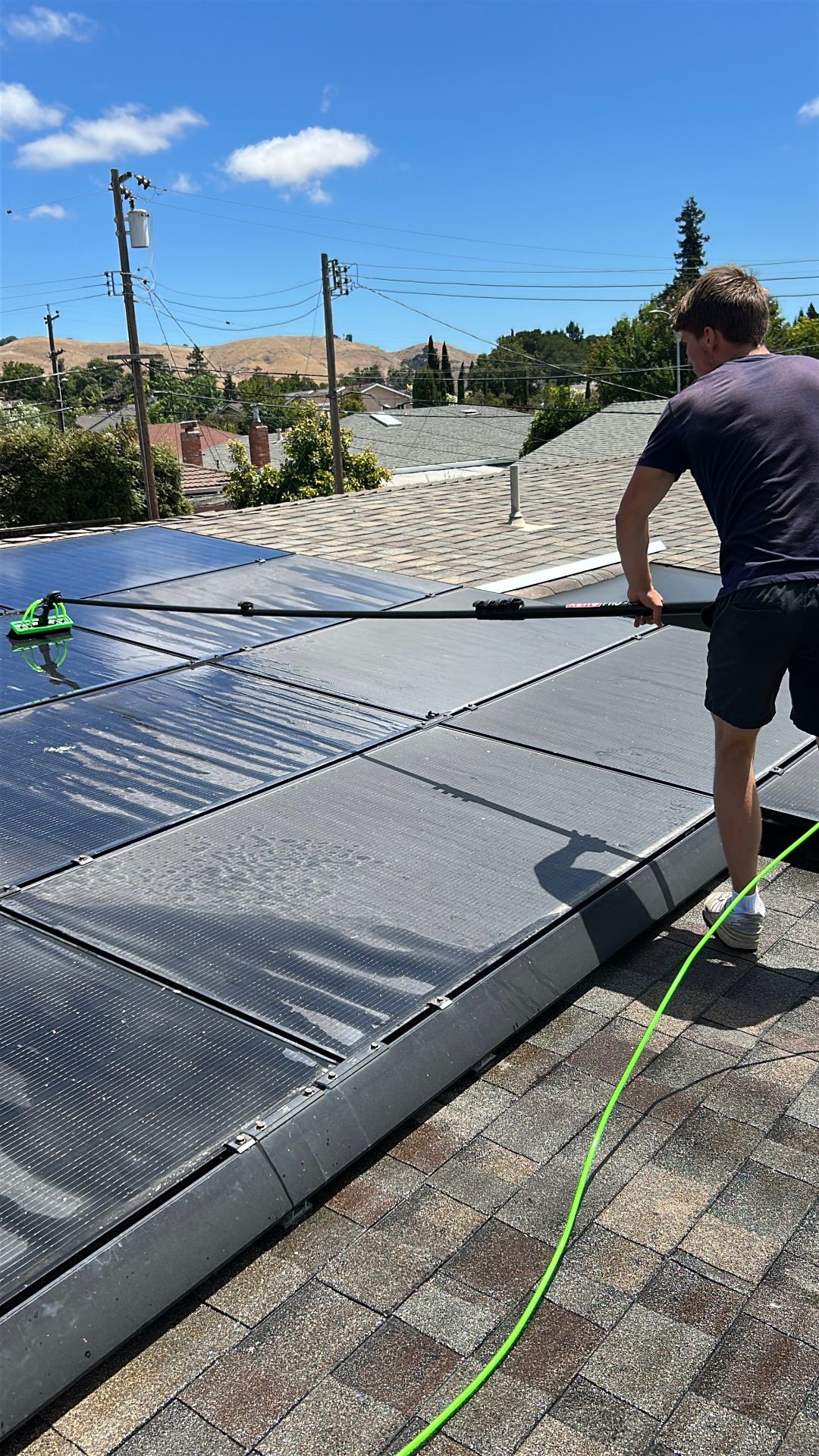
Professional solar cleaning uses pure deionized water — no minerals to leave spots — and a soft brush for anything the water alone won't lift. Done right, you should see production numbers rebound in the first sunny day after service. Homeowners who track their monitoring app usually report a visible bump.
How often to clean
Once a year is the minimum for most Bay Area systems. Homes near freeways, open fields, farms or with heavy bird activity often benefit from twice a year. The math works out — clean panels typically pay for the cleaning many times over in a single summer.
Ready to book?
Get a free quote for solar panel cleaning.
Response within the hour. Starting from From $49.